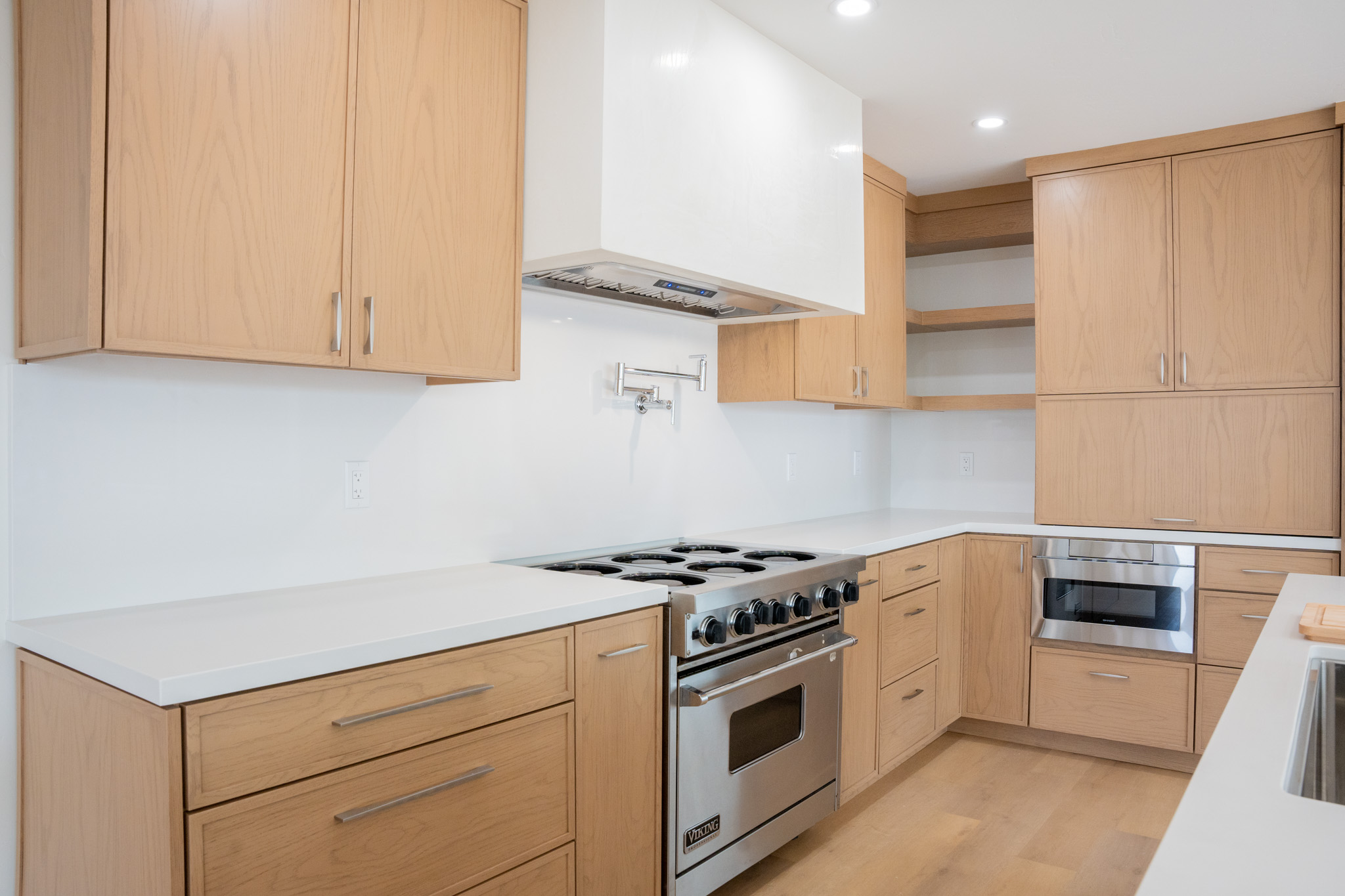
The kitchen island is no longer just a slab of granite for chopping vegetables; it has evolved into the absolute operational, social, and aesthetic epicenter of the modern home. But a poorly designed island wastes valuable square footage. Here is how to hyper-optimize yours.
Hidden Appliance Integration
To preserve wall space for expansive cabinetry or dramatic backsplashes, the modern island actively houses major appliances. Installing under-counter microwave drawers, seamless pull-out dishwasher drawers, and discrete wine coolers inside the island clears the perimeter of the kitchen entirely.
When matched with seamless custom cabinetry paneling, these appliances virtually vanish, letting the island serve as a monolith of pure design rather than a functional afterthought.
The Bi-Level "Working/Dining" Dynamic
If you have the floor space, a bi-level island creates immediate architectural interest while distinctly separating functions. The lower level (usually at 36-inch standard counter height) acts as the wet zone and prep station. A stepped-up or cantilevered bar-height tier (42 inches)—often in a contrasting material like live-edge wood or marble—serves to hide the cooking mess from the living room while providing a dedicated social dining space.
Secret Lateral Storage & The Waterfall Edge
The "Waterfall Edge"—where the luxury slab countertop material flows seamlessly down the sides to the floor—is a staple of modern premium remodels. It creates an incredibly durable, stunning focal point.
However, many designers fail to utilize the volume beneath. Custom islands should leverage double-sided storage. While the prep-side houses drawers and bins, the seating side can incorporate shallow, touch-to-open stealth cabinetry hidden behind the barstools to store seasonal items, large platters, and table linens.